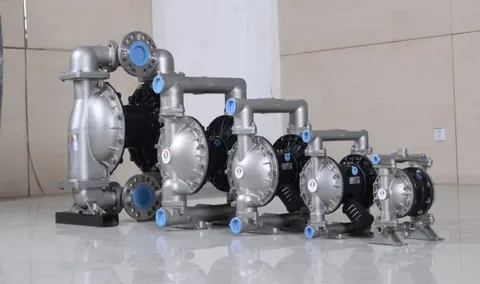
Product Overview
Diaphragm pumps use a reciprocating diaphragm that moves back and forth to create suction and discharge pulses. The movement is typically driven by an air‑operated mechanism, an electric motor with cam/lobe drive, or a hydraulic actuator. These mechanisms provide excellent control over flow rate, often allowing for fine adjustments via variable frequency drives (VFDs) or stroke regulator devices that interface with the plant’s PLCs or SCADA system. Flow rates can range from a few liters per hour for micro‑dosing chemicals to several cubic meters per hour for larger process circulation.
In SCADA applications, diaphragm pumps are often connected to PLC control logic, allowing automated start/stop commands, speed or stroke modulation, and alarm interlocks. For example, if a level transmitter detects that a chemical tank is getting low, the PLC can trigger an alarm or shut down the pump to prevent dry running. Additionally, flow meters installed downstream of the pump can feed real‑time flow data back into the SCADA system, enabling closed‑loop control of dosing rates based on process demands. This integration ensures accurate chemical addition, reduced waste, and improved treatment efficiency.
Diaphragm pumps are constructed from corrosion‑resistant materials such as PVDF (polyvinylidene fluoride), stainless steel, or PTFE (polytetrafluoroethylene), which makes them suitable for handling aggressive chemicals commonly used in water treatment. Their design also makes them tolerant of solids and abrasive particles, reducing the risk of clogging and improving reliability in demanding environments. The simplicity of the diaphragm pump design results in low maintenance requirements and long service life — important factors for continuous process automation in SCADA‑managed plants.
Installation points for diaphragm pumps include chemical feed stations, filter backwash systems, neutralization lines, and sludge handling circuits, where precise flow and repeatable dosing are vital. Integration with SCADA allows for trend analysis, alarms, historical data logging, and automated process adjustments, which together improve operational safety, compliance reporting, and resource optimization.
Wanner Hydra‑Cell Diaphragm Pump Brochure & Specifications (PDF)https://pdf.directindustry.com/pdf/kamoer-fluid-tech-shanghai-co-ltd/kllp1000-diaphragm-pump-data-sheet/242598-1017452.html?utm_source=chatgpt.com