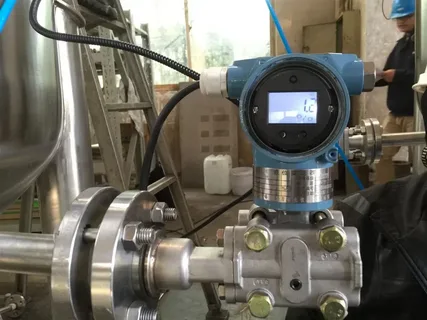
Product Overview
Differential pressure transmitters operate by comparing the pressure at two separate points — for example, upstream and downstream of a filter or across a pump inlet/outlet. Modern transmitters use high‑precision silicon or piezoresistive sensing elements and often include temperature compensation and self‑diagnostic functions to maintain accuracy in varying environmental conditions. The output is typically standardized to 4–20 mA analog or digital communication protocols like Modbus RTU or HART, enabling seamless integration with SCADA systems for both real‑time monitoring and historical logging. Operators can set threshold alarms, view historical trends, and use differential pressure data for automated control actions — for example, triggering a filter backwash cycle or shutting down a pump to prevent damage.
n water treatment applications, differential pressure transmitters are commonly installed in sand filter skids, membrane filtration systems (e.g., ultrafiltration or reverse osmosis), clarifier weirs, and HVAC pressure monitoring loops. Accurate ∆P readings help plant operators identify clogged filters, pump cavitation, or abnormal flow resistance, enabling early intervention and avoiding costly failures. Continuous differential pressure monitoring also contributes to energy optimization, as the system can adjust pump speeds or valve positions based on real‑time conditions, improving overall efficiency.
Beyond filters and pumps, differential pressure data can be used in automatic control loops where SCADA logic adjusts chemical dosing, orchestrates valve actuation, or manages overflow conditions based on pressure trends — all contributing to a safer, more efficient, and automated process environment.
Halstrup‑Walcher Differential Pressure Transmitter P‑29 Datasheet (PDF) https://pdf.directindustry.com/pdf/halstrup-walcher-gmbh/data-sheet-differential-pressure-transmitter-p-29/19779-1022677.html