Send us your mail or next updates.

Electric Valve Actuator for SCADA Water Treatment

Electric Valve Actuator for SCADA Water Treatment

Product Overview

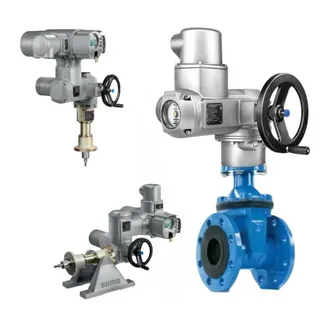
The Electric Valve Actuator is a key automation component used in SCADA‑controlled water and wastewater treatment plants to operate control valves such as butterfly valves, ball valves, and plug valves. Valve actuators convert electrical energy into precise mechanical motion, enabling automated opening, closing, and modulating control of flow and pressure throughout the plant. In modern industrial automation, electric actuators are preferred for their high reliability, accurate position control, and seamless integration with SCADA systems via PLCs or RTUs. By transmitting valve position and status back into the control system, operators gain real‑time insight, improved process efficiency, and automated control logic that enhances safety and performance.

Product Overview

Electric valve actuators are typically mounted directly on valve bodies and operate through part‑turn or multi‑turn mechanisms, depending on valve design and application. They are suited for both on‑off control (fully open/fully closed) and modulating control (proportional positioning) based on signal inputs from SCADA or PLC logic. Common input signals for modulating actuators include 4–20 mA analog, digital fieldbus protocols, or discrete control signals, while outputs often include position feedback and diagnostic data to improve process transparency. With built‑in torque and position sensors, these actuators provide precise and repeatable motion, essential for delicate processes like chemical dosing, distribution valve regulation, and bypass control.

n a water treatment plant’s SCADA system, valve actuators are used at key locations such as raw water intake lines, chemical feed manifolds, filter bypass loops, and distribution networks. For example, an electric actuator controlling a butterfly valve on a chemical feed line can regulate flow based on feedback from pH or conductivity sensors, enabling automated dosing adjustments without manual intervention. Similarly, actuators on main distribution valves help balance flow and maintain setpoints automatically as conditions change throughout the process. The result is enhanced operational efficiency, reduced manual labor, optimized chemical usage, and better compliance with regulatory water quality standards.

AUMA Electric Actuators for Industrial Valve Automation (PDF) https://pdf.directindustry.com/pdf/auma/electric-actuators-industrial-valve-automation/15285-778556.html