Product Overview
Unlike simple on/off solenoid valves, control valves provide continuous modulation — changing the size of the flow passage in proportion to an input signal. This capability allows fine adjustments that are essential for maintaining stable process conditions, such as keeping turbidity, pH, pressure, or flow setpoints within tight ranges. Common configurations include globe valves, butterfly valves with modulating actuators, ball valves with variable positioning, and diaphragm control valves, each chosen based on required flow characteristics, pressure drop, and fluid compatibility. The valves are typically equipped with position feedback devices that report the exact stem or disc position back to the SCADA system, ensuring that the valve moves as expected and allowing real‑time monitoring and diagnostics.
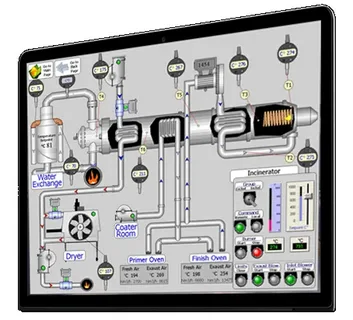
Integration with SCADA provides operators with real‑time visibility into valve status, flow rates, and process variables. Operators can create logic that automatically adjusts control valves in response to sensor measurements, such as reducing flow when pressure spikes or increasing chemical feed when pH drifts. Historical data from control valve operations — archived by SCADA historians — is invaluable for trend analysis, performance optimization, and predictive maintenance planning. With proper configuration, control valve automation reduces the need for manual intervention, improves system responsiveness, and enhances overall plant reliability.
Flowserve Control Valves & Actuation Portfolio (PDF) https://pdf.directindustry.com/pdf/flowserve/valve-actuation-instrumentation-portfolio/6194-785277.html?utm_source=chatgpt.com