Send us your mail or next updates.

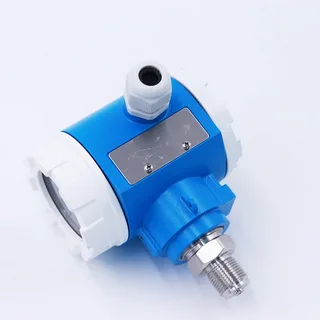
Industrial Pressure Transmitter for SCADA Water Treatment

Industrial Pressure Transmitter for SCADA Water Treatment

Product Overview

The Industrial Pressure Transmitter is an essential field instrument in water and wastewater treatment plants, where accurate pressure measurement is crucial for safe and efficient process control. In SCADA (Supervisory Control and Data Acquisition) systems, pressure transmitters provide real‑time data on pipeline pressures, pump suction and discharge, filter differential pressures, and tank pressures. These real‑time readings feed directly into PLCs (Programmable Logic Controllers) and RTUs (Remote Terminal Units), which relay the information to SCADA dashboards for monitoring, alarm management, and automated control. Accurate pressure data are foundational to maintaining process stability, preventing system failures, and ensuring regulatory compliance in industrial water treatment and distribution networks.

Product Overview

Industrial pressure transmitters use advanced piezoresistive or capacitive sensing elements that measure the force of fluid against a diaphragm and convert it into a standardized electrical signal. Common outputs include 4–20 mA, 0–10 V, HART, and digital protocols such as Modbus RTU, enabling seamless integration with SCADA systems and facilitating both real‑time visualization and historical logging of pressure trends. These instruments are built to operate reliably under harsh conditions — including humidity, vibration, and exposure to chemicals — often featuring IP65/IP67 rated housings and corrosion‑resistant materials such as stainless steel (316L) for long service life and reduced maintenance requirements.

Pressure transmitters are indispensable in many stages of water treatment automation. For example, they monitor inlet and outlet pressures on membrane filtration systems (such as reverse osmosis), alert operators to clogged filters or abnormal pump conditions, and ensure that distribution networks maintain safe and efficient pressure levels. In combination with SCADA logic, pressure readings can trigger automatic actions — such as adjusting pump speeds using variable frequency drives (VFDs), switching to backup pumps when thresholds are exceeded, or sending alarm notifications in case of dangerously low or high pressures. This automation improves operational efficiency and reduces the risk of costly manual errors. In addition to raw pressure data, modern transmitters often provide self‑diagnostics and onboard temperature compensation, ensuring stable performance across a range of environmental conditions and reducing the need for frequent recalibration. These features make pressure transmitters ideal for critical infrastructure applications — from pumping stations and filtration plants to final distribution systems. Continuous pressure data logging also supports predictive maintenance initiatives, enabling engineers to spot trends that precede equipment failure and schedule service proactively, thus reducing unplanned downtime and extending the life of mechanical components.

SIEMENS Pressure Measurement – SITRANS LH300 Technical Specifications (PDF) https://cache.industry.siemens.com/dl/files/389/109765389/att_1268353/v1/FI01_us_kap01.pdf